Short answer
Tsoureki is a Greek sweet, enriched bread, braided from three strands and flavoured with mahlepi, mastic and orange. It is closely linked to Greek Easter, but it is eaten as a breakfast or coffee bread too.
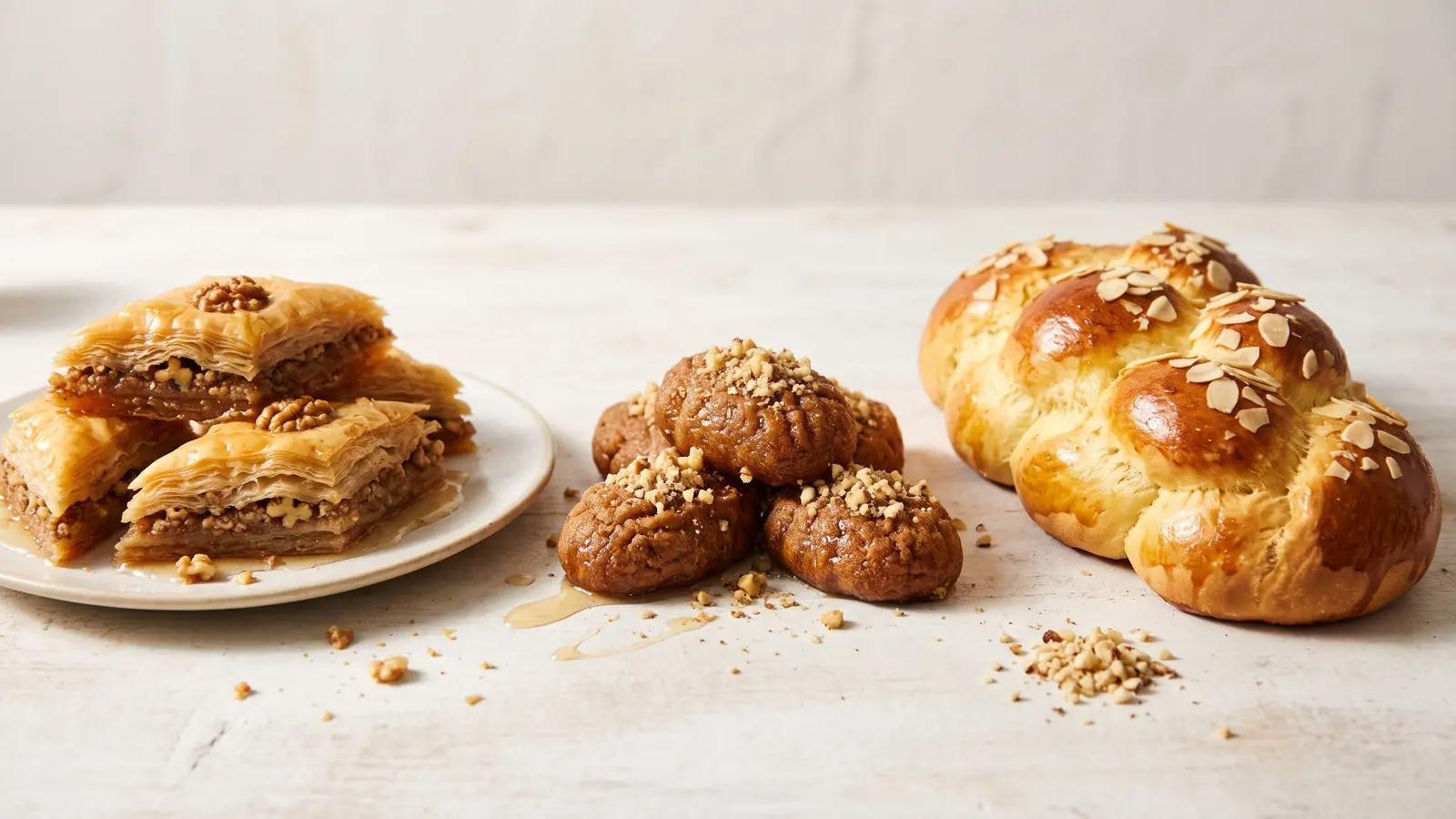
Tsoureki is a Greek sweet braided bread, an enriched dough of flour, eggs, butter and sugar flavoured with mahlepi, mastic and orange zest. The loaf is plaited from three strands and glazed until deep golden. It is most strongly linked to Greek Easter, yet it is also sold and eaten as an everyday sweet bread.
What is tsoureki?
Tsoureki is a soft, yeast-raised sweet bread from Greece, similar in richness to brioche but with its own spice profile. The name is spelled in several ways in English, including tsoureki, tsourekia (the plural) and choureki.
Its relatives include çörek in Turkey and other braided festive breads across the Eastern Mediterranean. Each tradition has its own flavourings, but the idea of a plaited, lightly sweet, fragrant bread is shared.
What gives tsoureki its flavour?
Tsoureki gets its flavour from mahlepi, mastic and orange. These three give the bread a faint almond-cherry note, a resinous freshness and a citrus perfume.
- Mahlepi (mahleb): a spice ground from the kernels of a wild cherry species. It tastes mildly of bitter almond and cherry.
- Mastic: a resin from the mastic tree, grown mainly on the Greek island of Chios, ground with a little sugar so that it does not clump. It adds a pine-like, cooling note.
- Orange: zest and sometimes juice, which gives brightness.
- Vanilla: used in some recipes alongside the other flavours.
Without mahlepi and mastic, the loaf is closer to a plain sweet bread. Home bakers who cannot find them often rely on orange and vanilla alone.
How is tsoureki made?
Tsoureki is made by mixing a rich dough, letting it rise twice, braiding it and baking it with an egg wash. The dough contains more eggs, butter and sugar than a plain loaf, so it rises slowly and needs warmth and patience.
- Warm milk, butter and sugar together, then stir in yeast and let it become foamy.
- Mix in flour, eggs, spices and orange zest to form a soft dough.
- Knead until smooth and elastic, which takes about 10 minutes by hand.
- Let the dough rise in a warm place until doubled, often one and a half to two hours.
- Divide, roll into ropes and braid.
- Rise again, brush with egg wash and bake at about 175 °C for 30 to 40 minutes.
Egg wash, sometimes with a sprinkling of sliced almonds or sesame seeds, gives the loaf its glossy brown crust.
Why is tsoureki braided?
Tsoureki is braided because plaiting is the traditional way to shape festive Greek bread. Most loaves use three strands, though larger ones may use more.
Braiding also gives the loaf a pleasant pull-apart texture. In Easter versions, a red-dyed egg is often pressed into the braid before baking. A separate guide on this site covers the Easter tradition in more detail, so this page concentrates on the bread itself.
How is tsoureki different from brioche and challah?
Tsoureki, brioche and challah are all enriched, often braided breads, but they differ in fat, flavour and use.
| Bread | Origin | Fat | Typical flavouring | Usual shape |
|---|---|---|---|---|
| Tsoureki | Greece | Butter | Mahlepi, mastic, orange | Braided loaf |
| Brioche | France | Plenty of butter | Plain, sometimes orange blossom | Moulded loaf, topknot |
| Challah | Jewish tradition | Oil, no dairy | Plain, sometimes honey | Braided loaf |
Tsoureki is the most aromatic of the three, thanks to the mahlepi and mastic.
How do you serve and store tsoureki?
Serve tsoureki in thick slices, plain or with butter, jam or honey, or toasted for breakfast. It goes well with coffee, tea and warm milk.
- Day one: eat it fresh and soft.
- Day two or three: toast slices, which brings back the aroma.
- Leftovers: make French toast, because the enriched dough soaks custard well.
- Freezing: wrap tightly, freeze whole or in slices and thaw at room temperature.
Keep the loaf in a paper or cloth bag for a day, then switch to a plastic bag so it does not dry out.
What mistakes make tsoureki dense?
Tsoureki turns out dense when the yeast is old, the dough is too cold or the rise is cut short. The enriched dough is heavy with eggs, butter and sugar, so it needs more time and warmth than a plain loaf.
- Old yeast: check that it foams in warm milk before using it.
- Cold kitchen: place the bowl somewhere around 25 to 28 °C, such as an oven with only the light on.
- Hot milk: liquid above about 45 °C can kill the yeast.
- Too much flour: the dough should stay soft and slightly tacky, not stiff.
- Rushing the second rise: the braid should look puffy and nearly doubled before it goes in the oven.
If the crust darkens too fast, tent the loaf loosely with foil for the last 10 minutes of baking.
What is mastic and where do you find it?
Mastic is a pale resin collected from mastic trees on the Greek island of Chios, sold as small translucent tears. Greek and Middle Eastern grocery stores carry it, and it is ground with a spoonful of sugar before use, because the resin is sticky and clumps when ground alone.
A small amount goes a long way. Too much tastes medicinal, and a quarter teaspoon of ground mastic is typical for one loaf. Mahlepi is sold as whole kernels or ready-ground, and the kernels should be ground just before use for the strongest aroma. If neither is available, bakers use orange zest and vanilla, and the bread is still good, though it will not taste quite like a traditional tsoureki.
Is tsoureki on the menu at Pâtisserie Afroditi?
Yes, tsoureki is named among the Greek pastries at Pâtisserie Afroditi, a Greek and French bakery on Rue Saint-Roch in Parc-Extension, Montréal. Tastet lists it with baklava and melomakarona as a classic, and the Google profile and other listings place the shop’s origins in 1971.
The sources do not state the size of the loaf, its flavourings, any seasonal timing or its price. To find out whether tsoureki is in the case on a given day, call the shop at +1 514-274-5302. The menu page lists the items recorded for this guide, and the hours and location page shows opening hours. This independent guide takes no orders.
Common questions
How do you pronounce tsoureki?
Tsoureki is said as tsoo-REH-kee, with the stress on the middle syllable. The tsoo sound at the start is like the end of cats followed by oo. You may also see it spelled tsoureki or choureki in English.
What does tsoureki taste like?
Tsoureki tastes lightly sweet, soft and buttery, with a warm perfume of orange and a faint resinous, almond-cherry note from the spices. It is less sugary than a cake and closer to brioche in texture.
Is tsoureki the same as brioche?
They are similar enriched breads made with eggs and butter, but tsoureki is flavoured with mahlepi and mastic, and it is usually braided. Brioche is plainer in flavour and is often baked in moulds.
What is mahlepi?
Mahlepi, or mahleb, is a spice ground from the kernels of a type of wild cherry. It gives tsoureki a faint taste somewhere between almond and cherry. It is sold in Greek, Middle Eastern and some specialty grocery stores.
How long does tsoureki stay fresh?
Tsoureki stays soft for two to three days at room temperature in a bag or bread box. After that it is best toasted. Slices freeze well for a month or two when wrapped tightly.
Looking for the basics? Pâtisserie Afroditi address and opening hours are on the home page.
This article is general information from an independent guide, not from Pâtisserie Afroditi itself. For the store’s current details see hours and location.