Short answer
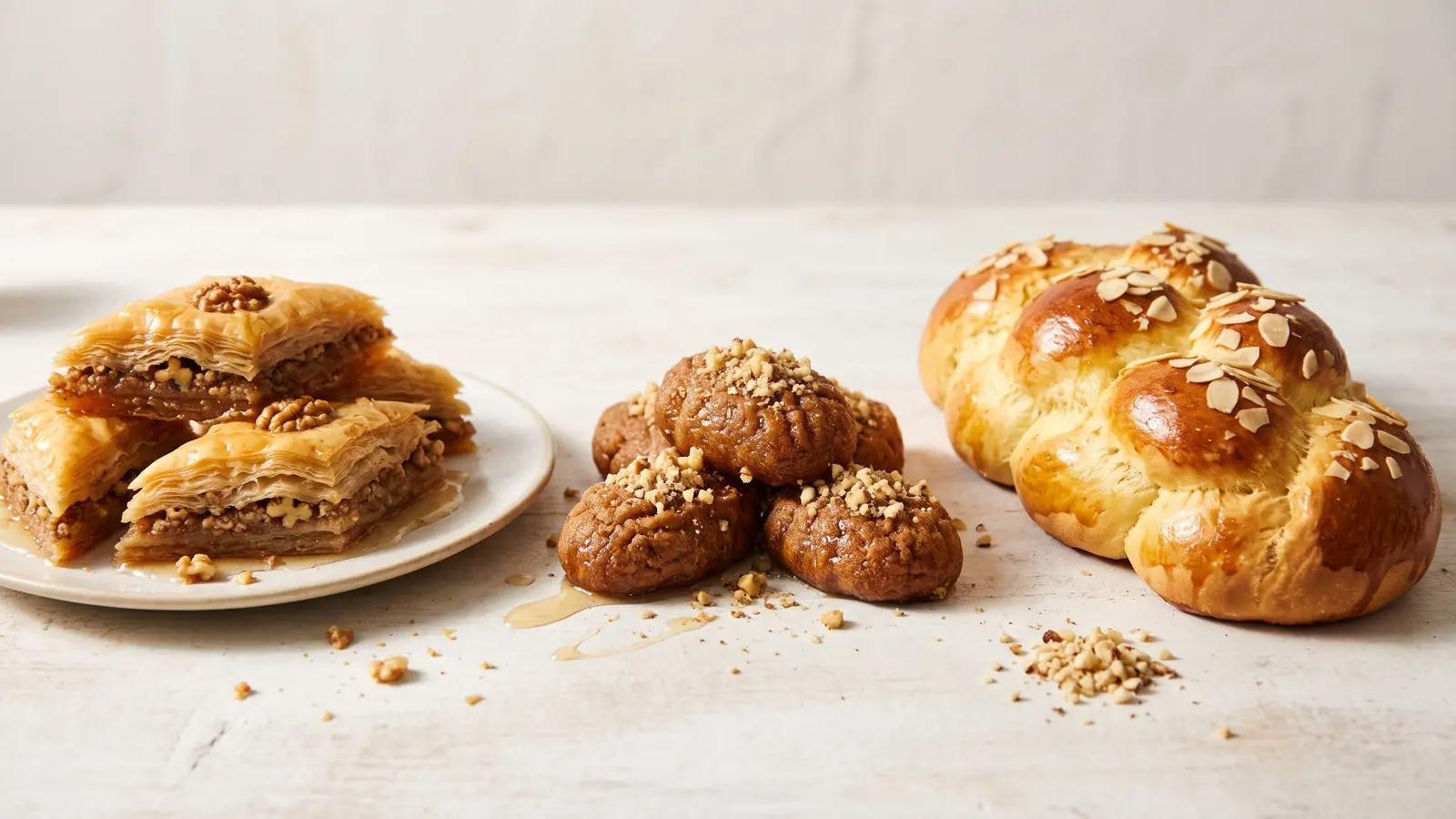
Baklava is a sweet pastry made of many thin filo sheets brushed with butter, layered with chopped nuts, baked until golden and soaked in syrup. It is cut into diamonds or squares and keeps for several days at room temperature.
Baklava is a sweet pastry made from many thin sheets of filo dough brushed with butter, layered with chopped nuts, baked until golden and finished with a sugar or honey syrup. It is cut into diamonds or squares before baking, and it is eaten in small pieces because it is rich and very sweet.
What is baklava made of?
Baklava is made of four things: filo pastry, butter, chopped nuts and syrup. Flavourings such as cinnamon, cloves, lemon peel or orange blossom water vary with the region and the baker.
- Filo pastry: paper-thin sheets of wheat dough, stacked by the dozen.
- Butter: melted and brushed between the sheets so that each layer bakes crisp. Some shops use clarified butter.
- Nuts: walnuts are the usual Greek choice, while pistachios are common in Turkish and Levantine styles. Almonds and hazelnuts also appear.
- Syrup: sugar and water, often with honey, lemon juice and a cinnamon stick, simmered until it coats a spoon lightly.
Because the recipe has so few ingredients, the quality of the butter, the freshness of the nuts and the care taken with the syrup decide how good the result is.
How is baklava built, layer by layer?
Baklava is built by laying half of the buttered filo sheets in a tray, spreading the nut mixture over them, covering it with the remaining buttered sheets and cutting it into pieces before it goes into the oven.
- Brush a baking tray with melted butter.
- Lay down the first half of the filo sheets, brushing each with butter.
- Spread the chopped nuts, mixed with sugar and spices, in an even layer.
- Add the remaining filo sheets, again brushing each with butter.
- Cut the pastry into diamonds or squares with a sharp knife while it is still raw, so the cuts reach the bottom.
- Bake in a moderate oven, around 175 to 180 °C, until deep golden.
- Pour the syrup over the pastry, following the temperature rule below.
Cutting before baking is the step that surprises beginners. Filo shatters when cut after it has baked, so the pieces are marked first and the syrup then seeps down the cuts.
What is the syrup rule for baklava?
The syrup rule is to combine hot pastry with cool syrup, or cool pastry with hot syrup, but never two hot or two cold elements. This contrast lets the filo drink the syrup while staying crisp.
Most home recipes pour cooled syrup over baklava straight from the oven. The sizzle that follows is normal. After soaking, the tray rests uncovered for several hours, often overnight, so that the syrup distributes and the top stays crackly. Covering it with plastic while it is still moist traps steam and softens the top.
How is Greek baklava different from other styles?
Greek baklava typically uses walnuts, cinnamon and a honey or lemon syrup, while Turkish baklava often uses pistachios and a lighter sugar syrup, and Levantine versions can use rosewater or orange blossom water. The structure, filo, nuts and syrup, is shared.
| Style | Common nut | Typical flavouring | Typical shape |
|---|---|---|---|
| Greek | Walnuts, sometimes almonds | Cinnamon, cloves, lemon, honey | Diamonds |
| Turkish | Pistachios, walnuts | Light sugar syrup, sometimes lemon | Squares, diamonds, rolls |
| Levantine | Pistachios, cashews, walnuts | Rose or orange blossom water | Squares, small bite-size pieces |
Where baklava first came from is disputed, and each country has a claim. A separate guide on this site looks at the question of whether baklava is Greek, so this page sticks to what baklava is and how to enjoy it.
How do you eat baklava?
Baklava is eaten with a small fork or with the fingers, one piece at a time, usually with strong coffee or tea. Its sweetness is concentrated, so a single piece goes a long way.
Because the top shatters, it helps to hold a napkin or small plate underneath. Some people tilt the piece on its side and cut it with the edge of a fork. Baklava suits the end of a meal, an afternoon coffee or a gift box, and it travels well because the syrup keeps it from drying out quickly.
How do you store baklava?
Baklava is stored at room temperature in a loosely covered container for a few days, away from heat and sunlight. The fridge dries and hardens the filo and is best avoided unless the room is very warm.
- Room temperature: a single layer in a shallow tin with the lid slightly open or covered with a clean cloth.
- Freezer: wrap tightly in layers and thaw at room temperature. The texture softens slightly.
- Reviving: a few minutes in a low oven brings back crispness, then cool before serving.
Homemade baklava with a thinner syrup may keep for a shorter time than a shop-made tray, so judge by smell, texture and appearance.
What is the difference between baklava and similar pastries?
Baklava is a syrup-soaked, nut-filled, layered filo pastry, which separates it from related sweets such as kataifi rolls, galaktoboureko and borek. Each relative changes one part of the formula.
| Pastry | Pastry layer | Filling | Soaked in syrup |
|---|---|---|---|
| Baklava | Sheets of filo | Chopped nuts | Yes |
| Kataifi | Shredded filo strands | Nuts or custard | Yes |
| Galaktoboureko | Sheets of filo | Semolina custard | Yes |
| Spanakopita | Sheets of filo | Spinach and feta | No |
Is baklava on the menu at Pâtisserie Afroditi?
Yes, baklava is one of the Greek pastries recorded for Pâtisserie Afroditi, the Greek and French pastry shop at 756 Rue Saint-Roch in Parc-Extension, Montréal. Tastet, The Main and the shop’s Google profile describe it as a Greek bakery that has operated since 1971.
The sources do not list baklava flavours, nut types, piece sizes or prices, so none are stated here. The shop does not publish a menu, and this independent guide cannot take orders. To ask about what is in the display case on a given day, call the shop at +1 514-274-5302 or check the menu page and the hours and location page for the recorded details.
Common questions
How many layers does baklava have?
There is no fixed number. Most bakers use around 20 to 40 sheets of filo, split between a base and a top, with the nut layer in the middle. Greek bakers often speak of a traditional count, but it varies from shop to shop.
Should baklava be eaten warm or cold?
Baklava is normally eaten at room temperature, when the syrup has settled and the top is crisp. Serving it straight from the fridge makes the filo hard, and serving it hot makes it soggy.
Why is my baklava soggy?
Soggy baklava usually means the syrup and pastry were both hot or both cold when combined, or the syrup was too thin. Pour cool syrup over hot pastry, or the reverse, and let it rest uncovered.
Can you freeze baklava?
Yes. Wrap pieces tightly and freeze them, then thaw at room temperature. The texture softens a little, so a few minutes in a warm oven restores some crispness before serving.
What drink goes with baklava?
Strong coffee or tea is the usual partner, because the bitterness balances the sweetness. In Greece a small cup of Greek coffee is common, and in Montréal a regular espresso or black tea works just as well.
This page is part of the independent guide to Pâtisserie Afroditi, which has the address, hours and menu.
This article is general information from an independent guide, not from Pâtisserie Afroditi itself. For the store’s current details see hours and location.