Short answer
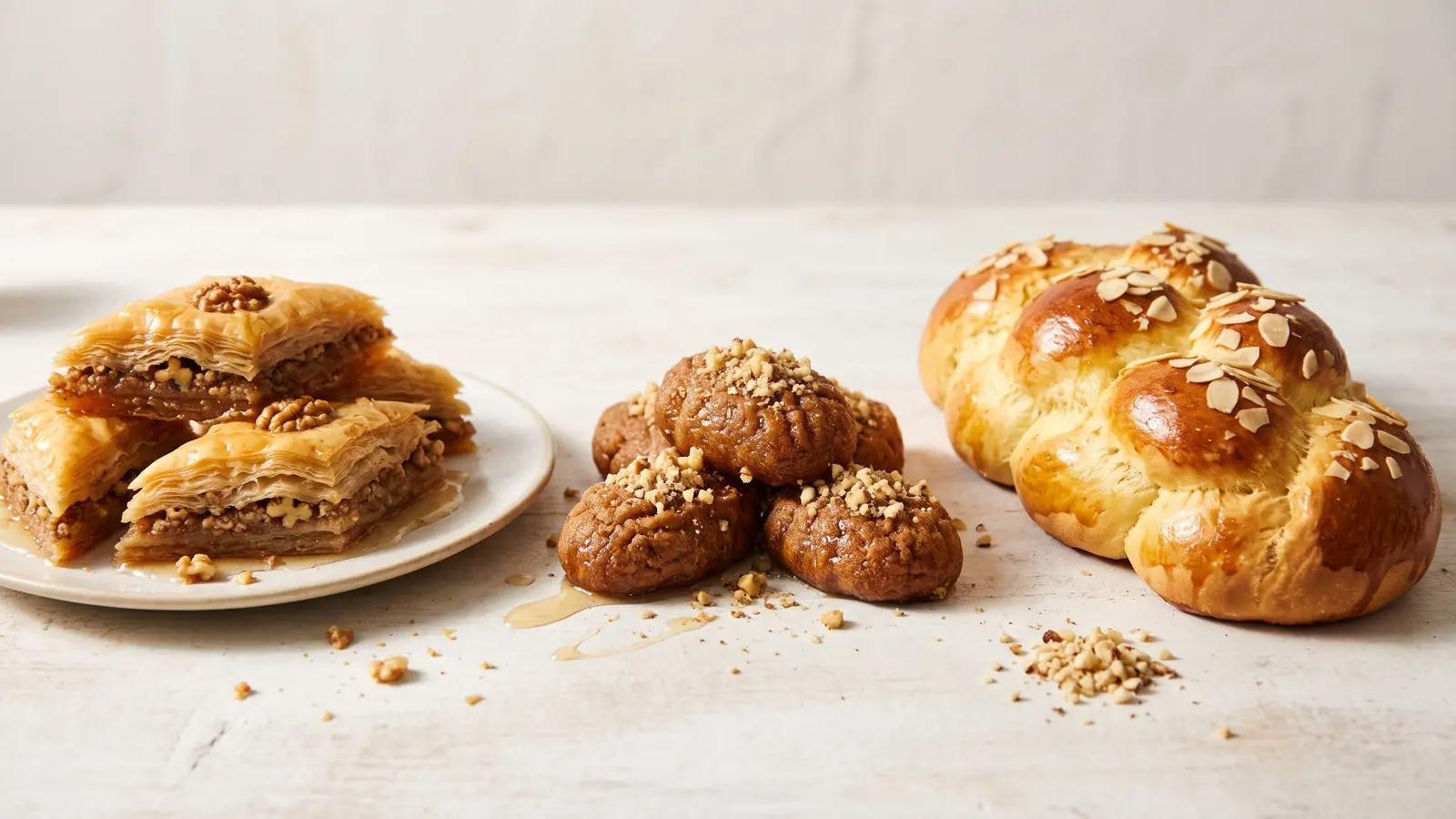
Melomakarona are oval Greek cookies made from flour, olive oil, orange and spices, baked, dipped in honey syrup and sprinkled with chopped walnuts. They are soft and spiced, and they are associated with Christmas in Greece.
Melomakarona are Greek honey cookies: oval, soft and spiced biscuits made from flour, olive oil and orange juice, baked, dipped in a honey syrup and topped with chopped walnuts. They are a classic Christmas sweet in Greece, and the first part of the name comes from the Greek word for honey, meli.
What are melomakarona?
Melomakarona are Greek cookies in the family of syrup-dipped sweets, with a dense, moist crumb and a strong flavour of orange, cinnamon and cloves. The word is plural, and a single cookie is a melomakarono.
They are baked from a dough that contains olive oil instead of butter, and semolina is often added for body. After baking, the warm cookies are dipped into a cooled honey syrup, left to absorb it, then sprinkled with crushed walnuts and sometimes cinnamon.
What are melomakarona made of?
Melomakarona are made from flour, semolina, olive oil, orange juice and zest, sugar, spices and baking soda, with a honey syrup and walnuts to finish.
- Flour and semolina: all-purpose flour provides the structure, and fine semolina adds a pleasant grain.
- Olive oil: a mild olive oil is typical, which gives the dough its character.
- Orange: both zest and juice flavour the dough.
- Spices: cinnamon and ground cloves are standard.
- Syrup: honey, sugar and water simmered briefly.
- Topping: finely chopped walnuts.
Recipes differ between families and regions. This guide describes the plain version, with orange juice and spices only.
How are melomakarona shaped and baked?
Melomakarona are shaped into small ovals, pressed lightly, and baked at a moderate temperature until golden. The dough is handled gently, because overworking it makes the cookies tough.
- Mix the oil, sugar, orange juice and zest, then stir in the flour, semolina, spices and baking soda to make a soft dough.
- Shape pieces of dough into ovals about the size of a walnut.
- Place them on a tray and press the tops gently with a fork, if desired.
- Bake at around 175 °C for 20 to 25 minutes, until golden.
- Cool slightly, then dip each warm cookie in the cooled syrup for about 30 seconds.
- Drain on a rack and top with chopped walnuts.
The dipping step is where the cookies earn their moisture. Too short and they stay dry, too long and they collapse.
How do melomakarona differ from other Greek cookies?
Melomakarona are soft, oil-based and soaked in syrup, while most other Greek cookies are dry or buttery. That contrast is how Greek bakers divide their cookie trays.
| Cookie | Fat | Finish | Texture |
|---|---|---|---|
| Melomakarona | Olive oil | Dipped in honey syrup, walnuts | Soft, moist, spiced |
| Koulourakia | Butter | Egg wash, sometimes sesame | Dry, crisp, twisted |
| Finikia | Olive oil | Honey syrup, sometimes sesame | Soft, similar to melomakarona |
| Shortbread-style cookies | Butter | Icing sugar dusting | Crumbly, melting |
The contrast is practical: melomakarona suit anyone who likes a moist, spiced cookie, while koulourakia suit dunking in coffee.
When are melomakarona eaten?
Melomakarona are eaten mainly at Christmas, and they are baked in the weeks before the holiday. Many Greek households make them in large batches to share with visitors.
They are also sold year-round in some bakeries. They go well with strong coffee or tea, because their sweetness is balanced by bitterness. A few families keep a tin of them on the counter through the winter holidays, and the flavour often deepens after a day or two of resting.
How do you store melomakarona?
Store melomakarona in an airtight tin at room temperature, with sheets of baking paper between layers. They keep well for a week or more, and many people think they taste better on day two.
- Keep them away from heat and humidity.
- Separate layers so the syrup does not stick pieces together.
- Freeze them undipped for longer storage, then dip after thawing.
Why do melomakarona use olive oil instead of butter?
Melomakarona use olive oil because it is the traditional fat of Greek home baking and it keeps the cookies moist for days. Olive oil also fits the foods eaten during Greek fasting periods, when butter and eggs are avoided, which is one reason many classic Greek sweets are made without dairy.
Oil dough behaves differently from butter dough. It does not cream with sugar to trap air, so the texture comes from the semolina, the orange juice and the baking soda reacting together. The result is dense but tender rather than light and crumbly. A mild, fruity olive oil works best, while a very peppery oil can taste bitter against the sweet syrup.
What mistakes should you avoid when making melomakarona?
The common mistakes are overmixing the dough, baking too long and dipping in syrup that is too hot or too thin. Each one makes the cookies hard or soggy.
- Overmixing: stir only until the flour disappears, because a worked dough turns tough.
- Overbaking: pull the cookies when they are golden, since they firm as they cool.
- Hot syrup: it makes the warm cookies fall apart, so cool it to lukewarm.
- Thin syrup: simmer it for a few minutes longer so it coats a spoon.
- Soaking too long: thirty seconds is usually enough for each cookie.
A test cookie baked first shows whether the dough needs a little more flour or a little more orange juice before the whole tray goes in.
How do you serve melomakarona?
Serve melomakarona on a plate or in paper cases with coffee, and let guests take one at a time. The cookies are sticky from the syrup, so small napkins help.
Is melomakarona on the menu at Pâtisserie Afroditi?
Yes, melomakarona are named among the Greek desserts at Pâtisserie Afroditi, the Greek and French bakery at 756 Rue Saint-Roch in Parc-Extension, Montréal. Tastet lists them with baklava and tsoureki as classics, and the shop has operated since 1971.
The recorded sources do not give the size, flavouring, topping or price, and they do not say when melomakarona are in the case. Availability around the winter holidays is not stated. Call +1 514-274-5302 to ask, and see the menu page and the hours and location page for the recorded details. This independent guide cannot take orders.
Common questions
What does melomakarona taste like?
Melomakarona taste of orange, cinnamon and honey, with a soft, moist crumb and a slight crunch from the walnut topping. The olive oil in the dough gives a gentle, rounded richness rather than the buttery taste of shortbread.
Are melomakarona the same as finikia?
They are closely related. Finikia is a name used in some regions for similar honey-dipped cookies, often with a slightly different shape or a coating of sesame seeds. Names and recipes vary across Greece.
How long do melomakarona keep?
Melomakarona keep for a week or more in an airtight container at room temperature, and the flavour often improves after a day or two. Because of the syrup, they stay soft rather than going stale quickly.
Are melomakarona vegan?
Many traditional recipes use olive oil instead of butter and no eggs, so they are often vegan, but recipes differ and honey is used in the syrup. Ask the baker about ingredients before assuming.
Why do melomakarona appear at Christmas?
They are a traditional Greek Christmas sweet, often baked in large batches at home in the weeks before the holiday. They are shared with guests.
Looking for the basics? Pâtisserie Afroditi address and opening hours are on the home page.
This article is general information from an independent guide, not from Pâtisserie Afroditi itself. For the store’s current details see hours and location.